Work does not become sustainable simply because an organisation offers a wellbeing program, introduces a flexible-work policy or makes occasional adjustments for individual employees. Sustainable work design means shaping job demands, working hours, technology, equipment, staffing, learning and leadership so that people can continue contributing safely and effectively as their careers and circumstances change.
This is a whole-of-workforce issue. Everyone at work is ageing, and every employee may experience changes in health, caring responsibilities, skills, confidence, financial circumstances, capacity or career direction during their working life.
In this guide:
- What is sustainable work design across the working life?
- Why does it matter?
- What does the current evidence tell us?
- What this evidence does not mean
- What does good sustainable work design look like?
- Turning this into action
- How progress can be measured
- Benchmark your organisation
What is sustainable work design across the working life?
Sustainable work is work that people can perform safely, meaningfully and productively over time without avoidable harm to their health or unreasonable depletion of their physical, cognitive or emotional resources.
It is not a fixed characteristic of a job. A role that is sustainable under one staffing model, workload or roster may become difficult to sustain when staffing falls, work intensifies, technology changes or recovery time is reduced.
It is also not determined by an employee’s age alone. Two people of the same age may have very different health circumstances, capabilities, experience, ambitions, caring responsibilities and preferences for work. Likewise, people at very different ages may need similar forms of flexibility, equipment, learning support or control over how work is performed.
There is no universal age at which a worker becomes “older.” Research, government programs and workforce datasets variously use thresholds of 40, 45, 50, 55 or 65 years, and even perceptions shift over time: Australian Human Rights Commission surveys of employers found the proportion classifying a worker aged 51–55 as “older” rose from 12.5% in 2014 to almost 17% in 2021, while the majority now place the threshold at 61–65 (Australian Human Rights Commission, 2021). A more useful approach looks at how the person, the work, the environment, the team and the employee’s career stage interact.
Why does it matter?
Australians are expecting to work later into life. Among people aged 45 years and over who intended to retire, the average intended retirement age in 2024–25 was 65.6 years. In the same reporting period, 156,000 people aged 45 years and over retired, at an average age of 63.8 years for those retiring that year (Australian Bureau of Statistics [ABS], 2025).
Longer working lives do not automatically produce sustainable working lives. Thirteen per cent of retirees the ABS surveyed said sickness, injury or disability was the main reason they left their last job. This figure includes health conditions work may not have caused, so it doesn’t prove work design caused their retirement. It does, however, show that health and capacity can influence workforce participation well before a person’s preferred retirement point (ABS, 2025).
For organisations, unsustainable work may become visible through:
- fatigue, injury, absence or prolonged recovery
- difficulty retaining people in physically or emotionally demanding roles
- experienced employees leaving earlier than anticipated
- requests for reduced hours or flexibility being managed as isolated exceptions
- capability being concentrated in employees whose jobs are becoming difficult to sustain
- limited internal pathways for people who can contribute, but may need to contribute differently
These are not simply “older-worker issues.” Poorly designed work can affect early-career employees, parents, carers, people with disability, workers returning from injury and people managing chronic health conditions. Better work design can therefore strengthen the sustainability of the entire workforce. One national figure is worth holding in mind throughout this article: workers aged 45 and over accounted for more than half of all worker fatalities recorded in 2024 (Safe Work Australia, 2025a), which is precisely why work design deserves close attention across every industry, without treating age itself as the hazard.
What does the current evidence tell us?
Work influences ageing, and ageing influences experiences of work
A major review of workplace ageing describes a reciprocal relationship: adult development can influence motivation, health and work behaviour, while job characteristics and work experiences can shape longer-term health, cognition and socioemotional development. The review emphasises substantial variation between individuals and cautions against treating chronological age as a uniform predictor of capability or performance (Scheibe & Kooij, 2024).
This means work design has consequences beyond immediate productivity. Repeated exposure to excessive workload, low control, conflict, poor support or inadequate recovery may accumulate across a career. Conversely, work that provides appropriate challenge, autonomy, learning and social support may help people maintain capability and engagement.
Good work design controls hazards at their source
Safe Work Australia describes good work design as a primary prevention approach that can eliminate or minimise hazards at their source. Its principles require organisations to consider physical, biomechanical, cognitive and psychosocial characteristics of work together with the needs and capabilities of the people involved. They also call for the active involvement of the people who perform the work (Safe Work Australia, 2015).
This shifts attention from questions such as “Can this person cope?” to more useful questions:
- What is creating the demand?
- How frequently and for how long is the employee exposed?
- Is the workload supported by adequate staffing?
- Can the task, equipment, sequence, environment or roster be improved?
- Does the employee have enough control and recovery opportunity?
- Are the organisation’s systems increasing or reducing risk?
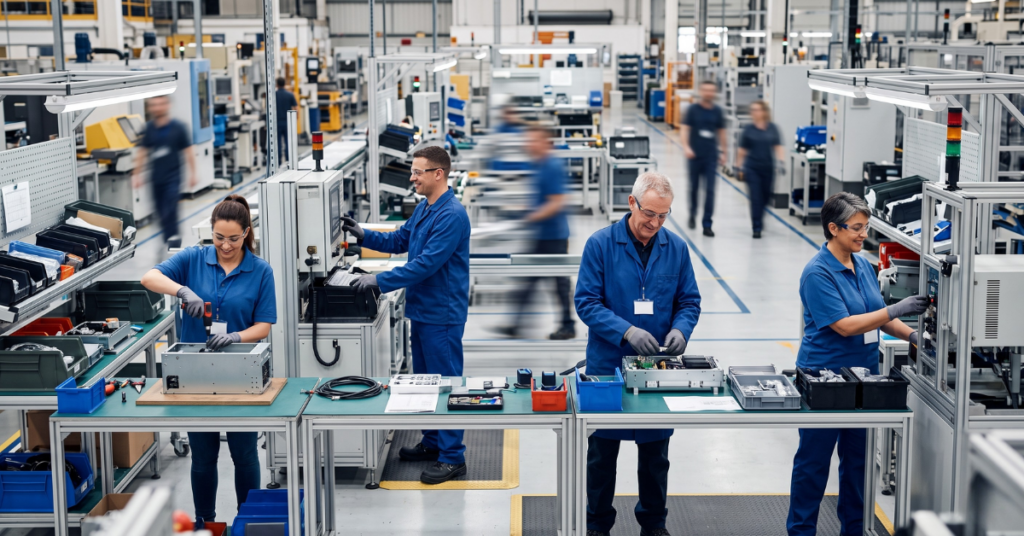
In practice: Manufacturing illustrates this well. The industry carries the third-highest share of serious workers’ compensation claims of any industry in Australia, at 10.1% (Safe Work Australia, 2025a), driven largely by body-stressing and manual-handling tasks, not by the age profile of the workforce. The good-work-design response is to assess where physical demand actually concentrates, involve the people doing the work in redesigning the task, and treat equipment and process changes as the primary control, rather than relying on individual technique or PPE alone (Safe Work Australia, 2015).
Motivating work should not be removed on the basis of age
Research involving two German employee samples examined combinations of autonomy, information-processing demands, workload, social support, emotional demands and social conflict. Motivating work-design profiles produced more favourable wellbeing than socially taxing profiles, though age-related differences were generally small and nuanced. Importantly, older employees responded positively to jobs containing stimulating task and knowledge characteristics, contradicting assumptions that later-career workers necessarily need less complex or less challenging work (El Khawli et al., 2023).
Sustainable job design should therefore distinguish between productive challenge and uncontrolled demand. Removing meaningful or complex work can reduce engagement just as surely as excessive workload can create strain.
A useful case in point is the Education and Training industry, where the pattern cuts against the common assumption. The Australian Principal Occupational Health, Safety and Wellbeing Survey found school leaders averaging 53.9 hours a week during term time in 2025, with “Sheer Quantity of Work” the top-rated stressor for the fifteenth year running, and 54.4% seriously considering leaving their role (Dicke et al., 2026). That’s a workload-design problem, not an age problem: intention to leave before retirement sits at 51% for leaders with 6-9 years’ experience, but falls to just 17% for those with 30 or more years’ experience (Australian Institute for Teaching and School Leadership, 2026). The attrition risk sits with role design, not an ageing workforce wanting out.
Systems approaches are promising, but intervention evidence remains limited
An Australian-led systematic review identified 39 records concerning occupational health and safety interventions for older workers. Organisational and composite interventions, those combining changes to work, the environment and individual support, appeared more promising than interventions directed only at employees. However, the underlying research was limited in quality and provided little basis for guaranteeing that any single intervention will improve injury, retention or work-ability outcomes (Bentley et al., 2023).
A 2026 systematic review and meta-analysis of interventions for workers aged 40 years and over similarly found that exercise programs produced modest improvements in reported work ability. Policy reforms that required people to remain in the labour market longer increased employment but also produced adverse spillovers, including greater use of disability benefits, unemployment or economic inactivity in some studies. The authors called for more multifaceted interventions addressing individual and organisational conditions together (Poutanen et al., 2026).
The practical implication is not that individual health initiatives have no value. Rather, organisations should not use exercise, resilience training, health education or ergonomic instruction as substitutes for controlling workload, fatigue, hazardous tasks, poor equipment or inadequate staffing.
Sustainable work also has a legal and regulatory context
Under model work health and safety laws, organisations must eliminate or minimise psychosocial and fatigue-related risks so far as is reasonably practicable. Relevant controls may include redesigning hours, shifts, breaks, equipment and task methods. Model codes only have legal effect where adopted in a jurisdiction, so organisations must check the requirements applying in their state, territory or Commonwealth workplace (Safe Work Australia, 2022, 2025). Our guide on how to identify and manage psychosocial hazards in the workplace covers the practical side of this obligation in more depth.
The Age Discrimination Act 2004 (Cth) covers direct and indirect age discrimination in work, subject to statutory exceptions. Under the Fair Work Act 2009 (Cth), eligible employees, including employees aged 55 or over, may request flexible working arrangements. Employers must respond in writing within 21 days and may refuse only on reasonable business grounds after completing the required consultation and consideration steps.
In practice: Public Administration and Safety, which includes government administration, police and public order and safety services, shows why this obligation matters beyond physically demanding industries. It has an above-average median worker age of 42 (Jobs and Skills Australia, 2026) and accounted for 9.2% of all serious workers’ compensation claims in 2023-24, the fourth-highest share of any industry (Safe Work Australia, 2025a). Its hazard profile is overwhelmingly psychosocial: Safe Work Australia’s own national strategy identifies this industry, alongside Health Care and Social Assistance, as where psychological hazards such as workplace harassment and bullying occur most frequently (Safe Work Australia, 2023). An above-average median age here sits alongside a hazard profile that has little to do with physical capacity, which is exactly why the Model Code of Practice on managing psychosocial hazards applies with particular relevance to this sector.
What this evidence does not mean
Age is not a workplace hazard. The hazards may be excessive physical load, long or irregular hours, insufficient recovery, high emotional demands, poor role clarity, low control, unsafe equipment or inadequate staffing. Age should not replace proper risk identification.
Sustainable work does not mean lowering legitimate performance or safety standards. It means examining whether the required outcome can be achieved through a safer, more effective and more accessible method.
Later-career employees should not automatically be given less complex work, fewer responsibilities or mentoring duties. Some may want progression, leadership, retraining, new projects, reduced hours, lateral movement or no change at all. Managers should ask rather than assume.
Flexibility is not the entire solution. Flexible hours or location will not correct an unsafe manual task, chronic understaffing, poor technology, excessive emotional exposure or an unreasonable workload. This same principle runs through our broader piece on why psychosocial safety is the strategic advantage every Australian workplace needs: flexibility policies help, but they cannot substitute for genuine redesign.
What does good sustainable work design look like?
1. Start with the work, not the employee’s age
Assess the real physical, cognitive and emotional demands of priority roles. Consider task duration, repetition, pace, staffing, interruptions, customer exposure, environmental conditions and the consequences of error.
Analyse where demand is concentrated and which controls are already effective. Do not infer exposure from job titles or age profiles alone.
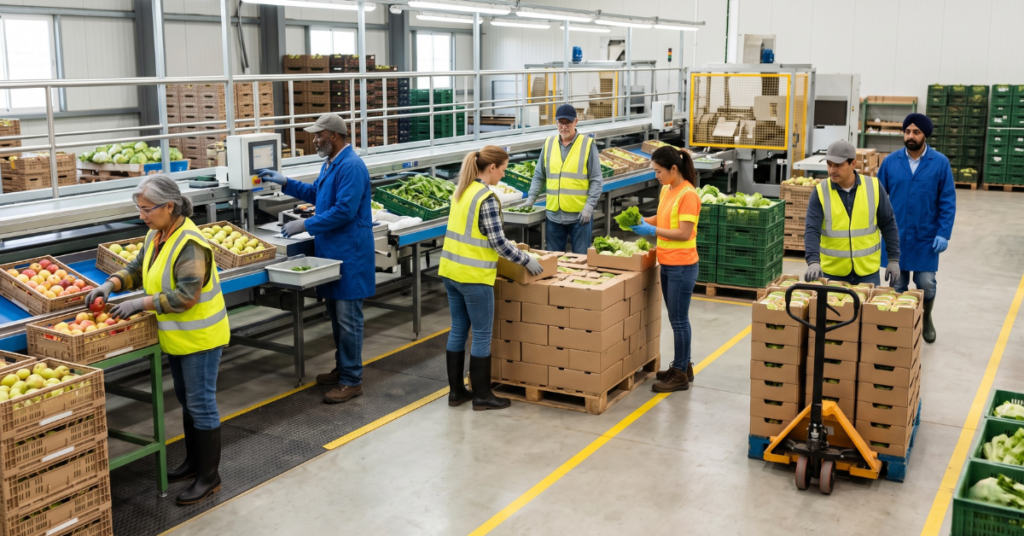
In practice: Agriculture, Forestry and Fishing is the clearest illustration of this principle. It’s Australia’s oldest workforce by a wide margin, with a median worker age of 51 against a 38-year median across all industries (Jobs and Skills Australia, 2026), and it carries the highest fatality rate of any industry, at 13.7 per 100,000 workers (Safe Work Australia, 2025a). The practical response for many farm businesses is task redesign rather than retirement.
For instance, that can look like automated or remote-operated spray rigs that cut down time spent in a tractor cab, GPS-guided auto-steer systems that reduce the physical strain of long repetitive driving shifts, or hydraulic lifting aids for moving feed, fencing materials or machinery parts. None of these changes require an experienced operator to step back from the business. Instead, they simply change which part of the task that person is doing, shifting time away from the highest-risk physical component while keeping their judgement and experience exactly where they’re needed.
2. Design for normal human variation
A sustainable system should accommodate reasonable variation in stature, strength, sensory needs, health, experience, confidence, caring responsibilities and learning preferences.
Universal improvements, such as adjustable equipment, clearer interfaces, predictable rosters, accessible training and multiple ways to complete a task, may reduce the need for repeated individual exceptions. Even so, some circumstances will still require individual adjustments.
3. Build recovery into operational design
Recovery should not depend entirely on employees using their personal time to compensate for work.
Review:
- shift length and sequencing
- overtime and on-call expectations
- travel between locations
- breaks within and between shifts
- consecutive high-demand tasks
- workload following leave, illness or night work
- second-job and cumulative-hours risks where relevant and lawfully managed
Organisations should integrate fatigue controls into rostering, staffing and operational planning, rather than relying principally on employees to report when they’ve reached exhaustion.
In practice: Transport, Postal and Warehousing already operates the clearest national-scale example of this principle. Median worker age here is 43, tied with Wholesale Trade for the second-oldest workforce of any industry (Jobs and Skills Australia, 2026), and the industry has historically recorded the largest single-industry share of worker fatalities, 26% in 2023 alone (Safe Work Australia, 2024). The Heavy Vehicle National Law requires fatigue management through Standard, Basic and Advanced Fatigue Management tiers, placing legal obligations on schedulers and operators, not just drivers, to prevent fatigue-related risk (National Heavy Vehicle Regulator, n.d.). It’s a model worth borrowing from precisely because it treats fatigue as a systems problem, not an individual one.
4. Treat flexibility as workforce capacity
Flexibility can include changes to start and finish times, location, task sequence, hours, workload distribution, leave, job sharing or temporary role arrangements.
Good practice requires clear criteria, genuine consideration, equitable access and periodic review. It should not depend solely on an employee’s confidence in negotiating with an individual manager.
5. Design technology and learning together
Technology can reduce physical load, improve information access and support remote or flexible work. It can also create new cognitive demands, monitoring pressure, usability problems and skill gaps.
Technology implementation should therefore include employee consultation, usability testing, adequate learning time, accessible support and review of unintended consequences. Training should remain open across the working life rather than being concentrated among employees presumed to have a longer future tenure.
6. Keep career movement possible
Sustainable careers are rarely completely linear. Organisations need credible pathways for progression, lateral movement, specialist work, project roles, retraining, return after injury, changed hours and transition between physically demanding and less physically demanding duties.
Organisations should not impose these pathways because of age. Instead, they should expand the options available through workforce planning and individual career conversations.
7. Connect consultation to decision-making
Employees often know where workarounds, bottlenecks, unnecessary physical effort and recovery problems occur. Consultation should involve people across age groups, occupations, employment types, locations and shifts.
Consultation is meaningful only when employees can see what the organisation heard, what will change, what won’t, and why.
How progress can be measured
Measurement should cover both implementation and outcomes. Useful indicators may include workload and fatigue exposure; overtime and break patterns; injury, absence and recovery duration; flexibility requests and outcomes; access to learning and promotion; internal mobility; retention in high-demand roles; employee perceptions of control and support; manager capability; and completion of work-design actions.
Organisations should collect age-related data only for a clear and legitimate purpose, with appropriate privacy, governance, aggregation and interpretation. A difference between age groups does not establish that age caused the outcome. Role, tenure, hours, exposure, employment type, health, gender, caring responsibilities and location may all influence the pattern.
This is exactly the kind of structured, cross-pillar question the Workforce Sustainability Assessment is designed to help answer at an organisational level, rather than role by role.
Frequently Asked Questions
What is sustainable work design? Sustainable work design means structuring job demands, hours, technology, equipment, staffing, learning and leadership so people can keep contributing safely and effectively as their careers and circumstances change, rather than relying on wellbeing programs or occasional individual adjustments to compensate for poorly designed roles.
Is sustainable work design only relevant to older workers? No. While an ageing workforce makes the issue more visible, poorly designed work affects early-career employees, parents, carers, people with disability and workers returning from injury just as much. Better work design strengthens sustainability across the entire workforce, not one age group.
How can organisations measure whether their work design is sustainable? Useful indicators include workload and fatigue exposure, injury and recovery duration, flexibility request outcomes, access to learning and internal mobility, and employee perceptions of control and support, tracked over time rather than as a single point-in-time snapshot.
Conclusion
Good sustainable work design is not about predicting when an employee will decline or leave. It is about understanding the demands created by the organisation and building enough flexibility, control, recovery, learning and career movement into the system for people to contribute through changing circumstances.
An age-ready organisation does not wait for rising injuries, capability gaps or unexpected departures. It identifies where work is becoming difficult to sustain, consults the people performing it, redesigns the conditions creating the problem and measures whether the response is working.
Ageing Well at Work: Your Next Step
Every organisation is somewhere different on the sustainability curve. Before you can redesign the right things, it helps to know where the real gaps sit.
BENCHMARK YOUR ORGANISATION:
The Workforce Sustainability Assessment scores your organisation across five pillars: Work Design & Capability, Career Sustainability, Leadership & Inclusion, Knowledge Continuity, and Workforce Strategy & Planning.
Not every organisation needs to start in the same place. For most, the assessment above is the right first move: a quick, structured way to see where the real gaps sit before committing resources anywhere. Where those gaps turn out to run deeper, an Age Impact Analysis builds out the fuller picture, covering workforce demographics, job demands, injury patterns, flexibility, engagement and capability exposure, so redesign starts from evidence rather than assumption. And once the direction is clear, Our Seasoned Program carries that work through to implementation, whether that means redesigning roles, developing leaders, transferring knowledge or managing a genuine workforce transition.
References
Age Discrimination Act 2004 (Cth) ss 14–18.
A systematic review of literature on occupational health and safety interventions for older workers. Ergonomics, 66(12), 1968–1983. Bentley, T., Onnis, L.-A., Vassiley, A., Farr-Wharton, B., Caponecchia, C., Andrew, C., O’Neill, S., De Almeida Neto, A., Huron, V., & Green, N. (2023)
The Australian Principal Occupational Health, Safety, and Wellbeing Survey: 15 years of data (IPPE Annual Report). Institute for Positive Psychology and Education, Australian Catholic University. Dicke, T., Kidson, P., & Marsh, H. (2026).
Fair Work Ombudsman. Flexible working arrangements.
Fair Work Act 2009 (Cth) ss 65–65A.
National Heavy Vehicle Regulator. (n.d.). Fatigue management.
Interventions to improve work ability and reduce early exit from the labor market: A systematic review and meta-analysis among midlife and older workers. Scandinavian Journal of Public Health. Advance online publication. Poutanen, J., Lallukka, T., Joensuu, M., Haukka, E., Ervasti, J., Härmä, M., & Shiri, R. (2026).
Safe Work Australia. (2022, August 1). Model Code of Practice: Managing psychosocial hazards at work
Safe Work Australia. (2023). Context: Australian Work Health and Safety Strategy 2023-2033
Safe Work Australia. (2024, September 17). Key work health and safety statistics Australia, 2024.
Workplace aging: The reciprocal relationship between adult development and work. Annual Review of Developmental Psychology, 6, 479–504. Scheibe, S., & Kooij, D. T. A. M. (2024).